• About the blog
  • About Sedeer
  • Series
    • Words of Science
    • Discussions
    • Foraging
    • Natural Selection
    • QM Workshop
  • Contact me
  • Accumulating Glitches
  • Collective Marvelling

Inspiring Science

~ Casting light on great ideas

Inspiring Science

Tag Archives: biology

Why you can’t stop – Eating & Addiction

16 Thursday Jan 2014

Posted by sedeer in Humans

≈ 11 Comments

Tags

addiction, Behavior, biology, diet, eating, food, Health, Human, obesity, Popular science, science, science and society, Sugar, weight loss, yo-yo dieting

Strawberry cake (Photo credit: Wikipedia)Everyone knows sugar-rich, fatty foods are unhealthy, but we keep eating them. The diet industry is booming, but so are waistlines. In the UK, 1 out of 5 adults is obese; in the US, the figure is 1 of every 3 adults. Why don’t we eat better? Are we just too weak-willed? Maybe not. The picture emerging from recent research into the neurobiology of eating tells a different story, in which our evolutionary history and changing environment have created a dangerous new relationship with our food. Continue reading →

Become part of a research project about zombie ants!

21 Saturday Dec 2013

Posted by sedeer in Arthropods, Disease, Hymenoptera, Insects, Microbiology

≈ 4 Comments

Tags

Ant, ants, biology, Coryceps, crowd funding, fungus, manipulation, microbes, Microryza, mind control, Ophiocordyceps unilateralis, Parasitism, Popular science, Research, science, science and society

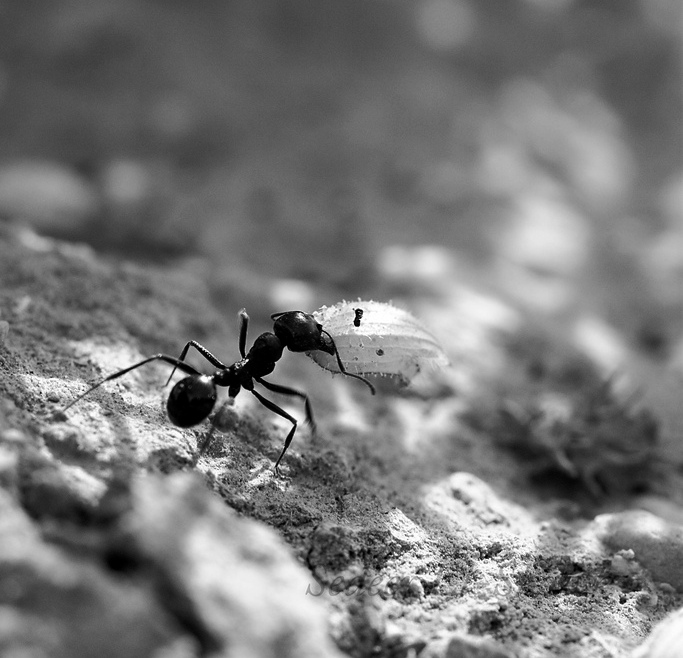
zombie ant fungus (Photo credit: pennstatenews)I’ve written about mind-controlling parasites and I’ve also written about ants a couple of times, but for some reason I still haven’t written about the famous “zombie ants“. These fascinating, macabre little wonders are ants that have been infected by a fungus (Ophiocordyceps unilateralis) which manipulates their behaviour. The fungus makes the ant climb up at plant stalk and bite into the underside of a leaf, clinging to it in a death grip. The fungus then kills the ant, consuming its innards before sending a reproductive stalk out through the corpse’s head.

I recently found out about an exciting research project looking into how the fungus manages its manipulation of the ant. Charissa de Bekker, a post-doc at Penn State University, is using Microryza to crowdfund her project, which will investigate what genes are active in the fungus’ manipulation of the ant. Since I think it’s an awesome project, I invited her to answer a few questions about herself and her work. Read on to find out what she has to say, and if you think the project sounds interesting or useful, consider backing it on Microryza — she’s got 11 days left to reach her goal! Continue reading →

Found while foraging (November 6, 2013)

06 Wednesday Nov 2013

Posted by sedeer in Foraging

≈ 6 Comments

Tags

biology, gender, links, performance poetry, poetry, Popular science, science, science and society, Science communication, Science in Society, Species, video, World War Z

It’s November! That’s not usually an exciting time for me (Helsinki is cold, dark, and wet in November), but this year is an exception. In just under three weeks, I’ll be moving to another continent and starting to write full time! I’m really excited about the change and eager to get started with the next phase of my life…and I’m also very busy with the process of getting there, so Inspiring Science will be more quiet than usual over the next few weeks. Hopefully I’ll manage to find the time to post something, but in the meantime here are some tidbits to tide you over. (If that’s not enough for you, have a gander through some of the old posts or previous linkfests.) As always, feel free to add more links in the comments!
Continue reading →

Controlling development by the numbers

30 Wednesday Oct 2013

Posted by sedeer in Development, Genetics, Vertebrates

≈ Leave a comment

Tags

animals, backbone, biology, Developmental biology, Gene, Gene expression, notochord, Popular science, science

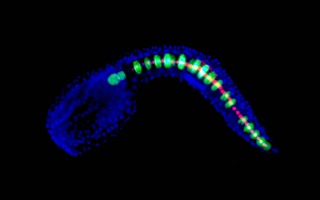
An embryo of the sea squirt Ciona. The nuclei of the 40 notochord cells are highlighted in red  and the contours of a few notochord cells are defined by green fluorescent protein. All other visible nuclei are colored in blue. (Image Credit: Janice H. Imai and Anna Di Gregorio)Genes have to be carefully coordinated to switch on at just the right moment in development in order to make a mature, complex embryo out of just a single cell. Scientists working at the Weill Medical College of Cornell University in New York have discovered how this coordination is accomplished. In a paper just published in PLOS Biology, they describe how the gene Brachyury controls the timing of a cascade of genes involved in a crucial process in vertebrate development. Continue reading →

How much sugar is too much?

23 Wednesday Oct 2013

Posted by sedeer in Humans, Mammals

≈ 2 Comments

Tags

biology, Coca-Cola, Diet (nutrition), food, Health, High-fructose corn syrup, Human, Popular science, science, Sugar

A 50cl Italian coke can. (Photo credit: Wikipedia)Everyone knows that too much sugar is bad for you, but how much is too much? According to a study published earlier this year, the amount of additional dietary sugar considered safe by regulatory agencies was enough to impact the health of mice, reducing the lifespan of females and the fertility of males. Continue reading →

DNA nanotechnology (Part II)

16 Wednesday Oct 2013

Posted by sedeer in Form

≈ 2 Comments

Tags

biology, biotechnology, DNA, DNA nanotechnology, drug delivery, Nanotechnology, origami, Popular science, science, Science fiction, shape, tetrahedron

Image credit: WikipediaIn the previous post, I introduced DNA nanotechnology and talked a bit about some of the 2-D structures that researchers have devised. Scientists have also used these techniques to build a variety of 3-D shapes, some of which can be used as containers for drug delivery. In this post, I’m going to focus on the DNA tetrahedron, a four-sided pyramid made of DNA which is relatively easy to build and manipulate and has proven useful in several recent studies.
Continue reading →

← Older posts
Newer posts →

Search

Donate Button with Credit Cards
Follow @inspiringsci
Follow Inspiring Science on WordPress.com

Enter your email address to follow this blog and receive notifications of new posts by email.

Join 1,699 other subscribers
RSS Feed RSS - Posts

Ongoing discussions

  • Is there evidence for natural selection? | Uncommon Descent on Natural selection: On fitness
  • istilah kesusastraan on Pointing ravens and theory of mind
  • hazratganj call girl on Pointing ravens and theory of mind
  • gomti nagar call girl on Pointing ravens and theory of mind
  • ghaziabad escorts on Pointing ravens and theory of mind
  • indore escorts nidhi nagar on Pointing ravens and theory of mind
  • wig price on Pointing ravens and theory of mind
  • aso agency on Pointing ravens and theory of mind

What’s popular now?

  • Telling left from right: which side gets the heart?
  • Falling faster than gravity
  • Book review: We Are Our Brains
  • Contact me
  • Natural selection: different modes

Blogs to check out

  • Accumulating Glitches
  • alternative viewpoints
  • AntyScience
  • Baldscientist
  • Eyes on the Environment
  • Language Log
  • Letters of Note
  • naked capitalism
  • Raising My Rainbow
  • The Scorpion and the Frog
  • The Smaller Majority

Copyright

Creative Commons License
All text and original images by Sedeer El-Showk. Licensed under a Creative Commons Attribution-NonCommercial-NoDerivs 3.0 Unported License.

Thanks to

  • Arkadia International Bookshop
  • The Book Hive
  • The Television and Movie Store
  • Rönnels Antikvariat
Inspiring Science is part of:
  • Collective Marvelling
  • SciComm Network

I'm on ScienceSeeker-DNA

Nature
Blog Network

Categories

Archives

Create a free website or blog at WordPress.com.

Privacy & Cookies: This site uses cookies. By continuing to use this website, you agree to their use.
To find out more, including how to control cookies, see here: Cookie Policy
  • Subscribe Subscribed
    • Inspiring Science
    • Join 1,699 other subscribers
    • Already have a WordPress.com account? Log in now.
    • Inspiring Science
    • Subscribe Subscribed
    • Sign up
    • Log in
    • Report this content
    • View site in Reader
    • Manage subscriptions
    • Collapse this bar
 

Loading Comments...
 

You must be logged in to post a comment.