Tags
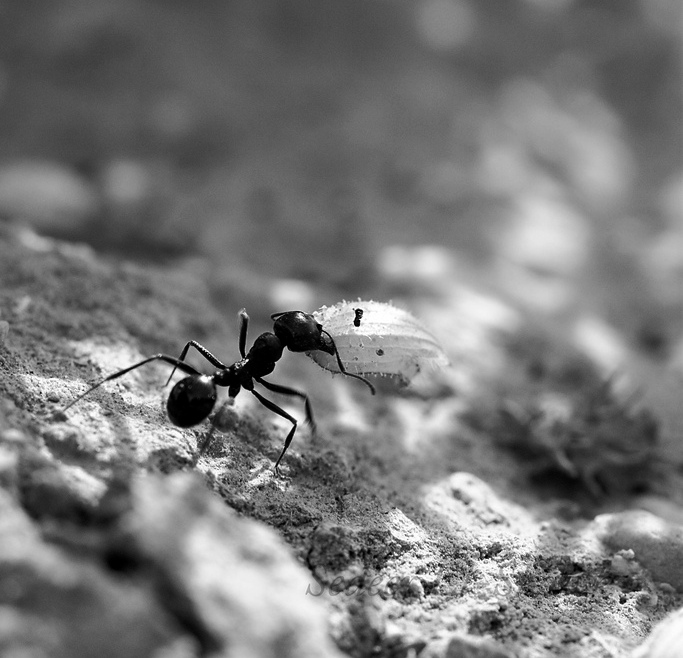 Here are some odds & ends to help get the week started Continue reading

18 Tuesday Sep 2012
Posted in Foraging
Tags
Here are some odds & ends to help get the week started Continue reading
14 Friday Sep 2012
Tags
Hominidae, Human, Mitochondrial DNA, Mitochondrial Eve, Mutation rate, Popular science, Radiocarbon dating, science
 Most of the interesting recent events in human evolution probably happened longer ago than we had thought, according to Aylwyn Scally and Richard Durbin of the Sanger Institute. In an opinion piece published in Nature Review Genetics this week, they re-examine the story of how humans left Africa, taking into account new data from several recent whole-genome studies.
05 Wednesday Sep 2012
Tags
biology, Denisova hominin, Denisovan, DNA, Evolutionary Anthropology, Genome, Homo floresiensis, Human, Neandertal, Neanderthal, Popular science, science
 Around 60,000 years ago, modern humans left Africa, the cradle of our species. As we spread across the face of the Earth, we discovered that we weren’t the first or the only humans to make that sojourn. From Central Asia to Europe, we met our distant cousins the Neanderthals, descendants of a 500,000 year old migration; further east were the Denisovans, ranging from Sibera to Southeast Asia. Although these other humans died out around 30,000 years ago, some comfort can be found in the knowledge that a part of them lives on in us. Genetic evidence uncovered in the past few years suggests that our migrating ancestors may have mated with these other humans during their encounters. Not everyone was convinced, though, launching an ongoing debate about whether the genetic similarity might be due to common ancestry rather than inbreeding. Continue reading
30 Thursday Aug 2012
Posted in Foraging
Tags
It’s time for another congeries of bits from around the web. One of the links in this post (the bee videos) was sent in by a reader. If you come across something that you think should be including in the next Foraging post, either leave a comment below or get in touch!
28 Tuesday Aug 2012
Posted in Complex systems, Hymenoptera, Insects, Modelling
Tags
animals, anternet, ants, Behavior, biology, complexity, emergence, emergent behavior, internet, network, Popular science, science
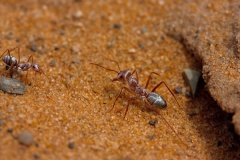 A recent study looking at how colonies of ants regulate their foraging behaviour has caused a bit of a buzz online. A lot of the coverage has focused on a similarity highlighted in the press release, which says that the ants “determine how many foragers to send out of the nest in much the same way that Internet protocols discover how much bandwidth is available for the transfer of data”. While it’s wonderful that the study has received so much attention, I can’t help but feel that the really interesting aspect of this study has been overlooked in the excitement about the “anternet”. While the similarity between the two systems is striking, I’m more fascinated by a basic difference: unlike our computer networks, the regulation system in ants isn’t purposefully designed but emerges from uncoordinated decisions made by individuals.
Continue reading
19 Sunday Aug 2012
Posted in Language, Words of Science
Tags
Alluvial fan, Alluvium, deposit, environment, etymology, flood, nature, Popular science, science, Words of Science
Like many other fields, science has its own style of communication full of specific jargon and guided by unwritten rules. Most of the posts on this blog focus on breaching this barrier to the public’s understanding and appreciation of science. In this series, I’d like to take another approach by highlighting scientific words which have escaped (or should escape!) the confines of jargon to reach a broader appeal because of their sound or their evocative power as metaphors. Today’s word is alluvium. [Previous words: petrichor]
Continue reading
 Inspiring Science
You must be logged in to post a comment.