• About the blog
  • About Sedeer
  • Series
    • Words of Science
    • Discussions
    • Foraging
    • Natural Selection
    • QM Workshop
  • Contact me
  • Accumulating Glitches
  • Collective Marvelling

Inspiring Science

~ Casting light on great ideas

Inspiring Science

Tag Archives: science

Found while foraging (October 13, 2012)

13 Saturday Oct 2012

Posted by sedeer in Foraging

≈ Leave a comment

Tags

gender, internet, macro, photography, Republicans, science, science and society, Science in Society, sexism, space, video
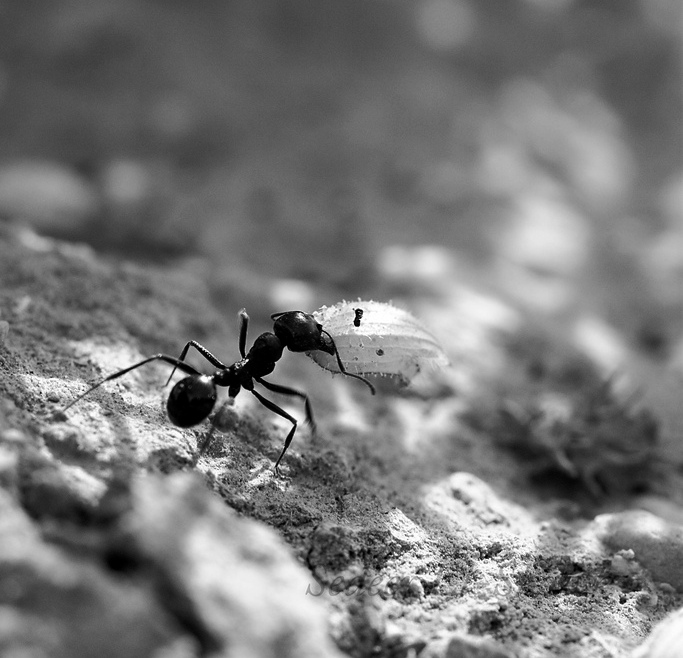
I realized today that I’ve collected quite a few links, so it must be time for another Foraging post.  Lots of great photos this time, as well as a few important articles about sexism and, of course, some great science writing!  I hope you find something you like….have a great weekend, everyone! Continue reading →

Of moss and micro-arthropods

10 Wednesday Oct 2012

Posted by sedeer in Arthropods, Plants

≈ 2 Comments

Tags

biology, dispersal, moss, Plant, pollination, Popular science, reproduction, science, Sperm, Springtail

Springtail (Folsomia candida) in patch of moss (Ceratodon purpureus). Photo by Rocky Cookus, Portland State UniversityMosses were among the first plants to colonize land over 400 million years ago, but they never really left the water behind. Unlike seed plants, mosses (as well as ferns and liverworts) don’t enclose their sperm in pollen but release it directly. Since their unprotected sperm is vulnerable to drying out, these plants can only reproduce if there’s a watery film through which the sperm can swim. However, recent research has started to uncover a more complicated story behind the sex life of mosses. Mounting evidence suggests that mosses recruit micro-arthropods like springtails and mites to carry their sperm in the same way that flowering plants attract and reward insect pollinators.
Continue reading →

Blond Melanesians: what else are we missing?

05 Friday Oct 2012

Posted by sedeer in Evolution, Genetics, Humans

≈ 5 Comments

Tags

biology, Blond, diversity, Europeans, Genetics, Genome, Melanesians, Popular science, science, science and society, Science in Society, Solomon Islands

English: Blond Vanuatu boyOn the Solomon Islands in the south-eastern Pacific, it’s not uncommon to come across Melanesian children with dark skin and remarkably blond hair. While most people might take this unusual trait as a sign of European ancestry, Sean Myles wasn’t convinced. Curious to understand how the darkest skinned people outside of Africa could also have the highest frequency of blond hair outside of Europe, he led a team of scientists to unravel the genetics behind this mystery. The striking results of their research should serve as a note of caution about what we’re learning from the rapidly growing field from human genomics.
Continue reading →

Words of science: nychthemeron

30 Sunday Sep 2012

Posted by sedeer in Language, Words of Science

≈ 6 Comments

Tags

day night, etymology, nychthemeron, Popular science, science, Words of Science

Like many other fields, science has its own style of communication full of specific jargon and guided by unwritten rules.  Most of the posts on this blog focus on breaching this barrier to the public’s understanding and appreciation of science.  In this series, I’d like to take another approach by highlighting scientific words which have escaped the confines of jargon to reach a broader appeal because of their sound or their evocative power as metaphors.  Today’s uncommon but useful word is nychthemeron. [Previous words: petrichor, alluvium]
Continue reading →

What did we actually learn about GM foods and tumors?

26 Wednesday Sep 2012

Posted by sedeer in Genetics, Mammals

≈ 8 Comments

Tags

animals, Genetically modified food, Genetically modified maize, GMO, Monsanto, Popular science, Roundup, science, science and society, Science communication, Science in Society, Statistics

There’s been a great furor recently about a study which purports to show that rats fed GM corn develop more tumors than rats fed regular corn.  I’m actually a bit late to this party; scientists and science writers across the web have already picked apart the flaws in this study, from shoddy statistics to poor design, and Carl Zimmer has called the whole thing “a rancid, corrupt way to report about science“.  I don’t have much to add to the chorus; what I’d like to do with this post is to make clear to the layperson what we mean by “bad statistics” and why that makes the study unconvincing.

Continue reading →

The bacteria that make it rain

24 Monday Sep 2012

Posted by sedeer in Bacteria, Microbiology, Plants

≈ 13 Comments

Tags

biology, Bioprecipitation, Cloud, Ice, Ice crystals, Ice nucleus, Nucleation, Popular science, science, Water cycle

Thundercloud (image courtesy of Hannele Luhtasela-El Showk)Strange as it may seem, water doesn’t actually freeze at zero degrees. In fact, even at temperatures as cold as -10°C, water still needs help turning into ice. Living creatures of all stripes have learned to take advantage of this curious fact in different ways, though none have done so with quite as much style as bacteria. Continue reading →

← Older posts
Newer posts →

Search

Donate Button with Credit Cards
Follow @inspiringsci
Follow Inspiring Science on WordPress.com

Enter your email address to follow this blog and receive notifications of new posts by email.

Join 1,699 other subscribers
RSS Feed RSS - Posts

Ongoing discussions

  • Is there evidence for natural selection? | Uncommon Descent on Natural selection: On fitness
  • istilah kesusastraan on Pointing ravens and theory of mind
  • hazratganj call girl on Pointing ravens and theory of mind
  • gomti nagar call girl on Pointing ravens and theory of mind
  • ghaziabad escorts on Pointing ravens and theory of mind
  • indore escorts nidhi nagar on Pointing ravens and theory of mind
  • wig price on Pointing ravens and theory of mind
  • aso agency on Pointing ravens and theory of mind

What’s popular now?

  • Telling left from right: which side gets the heart?
  • Natural selection: different modes
  • Do ants really count their steps?
  • Words of science: science

Blogs to check out

  • Accumulating Glitches
  • alternative viewpoints
  • AntyScience
  • Baldscientist
  • Eyes on the Environment
  • Language Log
  • Letters of Note
  • naked capitalism
  • Raising My Rainbow
  • The Scorpion and the Frog
  • The Smaller Majority

Copyright

Creative Commons License
All text and original images by Sedeer El-Showk. Licensed under a Creative Commons Attribution-NonCommercial-NoDerivs 3.0 Unported License.

Thanks to

  • Arkadia International Bookshop
  • The Book Hive
  • The Television and Movie Store
  • Rönnels Antikvariat
Inspiring Science is part of:
  • Collective Marvelling
  • SciComm Network

I'm on ScienceSeeker-DNA

Nature
Blog Network

Categories

Archives

Blog at WordPress.com.

Privacy & Cookies: This site uses cookies. By continuing to use this website, you agree to their use.
To find out more, including how to control cookies, see here: Cookie Policy
  • Subscribe Subscribed
    • Inspiring Science
    • Join 1,699 other subscribers
    • Already have a WordPress.com account? Log in now.
    • Inspiring Science
    • Subscribe Subscribed
    • Sign up
    • Log in
    • Report this content
    • View site in Reader
    • Manage subscriptions
    • Collapse this bar
 

Loading Comments...
 

You must be logged in to post a comment.