Found while foraging (May 28, 2013)

Tags

, , , , , , , , , , , , , ,

It’s time for another Found while foraging!  I’m going to do things slightly differently this time.  Instead of just sharing various tidbits I’ve come across online since last time, I’m going to focus on science-related stuff to celebrate the recent launch of my new blog, Accumulating Glitches, as part of Nature’s Scitable network.  I’d also like to take the opportunity to also point you towards some of my favourite posts from the other new blogs in the relaunched network.  I hope you’ll find them enlightening and entertaining!  As always, though, feel free to add more links in the comments!
Continue reading

Do species really exist?

Tags

, , , , , ,

I mentioned a while ago that I’d been invited to write about evolution for Nature’s Scitable blog network.  The network finally relaunched this week and my new group blog, Accumulating Glitches, went live earlier today!  Together with Sarah Jane Alger, I’ll be writing about how evolution works and the amazing world it has created — “exploring the grandeur of evolution”.  We’re planning to post every Monday and I hope you’ll join us there — we’ve got lots of exciting stories to share!  For now, here’s a taste of the inaugural post:

Faced with the rich diversity of living beings around us, humans have proven unable to resist the temptation to try to organize and categorize them. We have a natural tendency to classify things, a habit that’s deeply rooted in our cognition and use of language. Our brain excels at recognizing patterns (and thus finding meaning where it doesn’t exist), an ability that allows us to interact with the world using names — like “chair” — that we might be hard-pressed to properly explain. In fact, it’s surprisingly difficult to define even a seemingly straightforward word like “chair” in a way that would let us recognize everything that should be included (from office chairs and recliners to stools and wheelchairs) but nothing that shouldn’t (like tables, tree stumps, or other things we might decide to sit on).

Despite these difficulties, we’ve been classifying organisms throughout the history of human thought, from Aristotle’s division between plants and animals to modern scientific nomenclature. The modern classification system is based on grouping organisms into units called ‘species’; species, in turn, group together into a larger units called genus, family, order, and so on through the nested hierarchy of life. What make a species, though? Why should a particular group of organisms be thought of as a unit and given a distinct name? How do we decide which organisms make up a species?

Read the rest over at Accumulating Glitches

Whose genome is it anyway?

Tags

, , , , , , , , , , , , , , , ,

Angelina Jolie at the 2010 Comic Con in San Diego (Photo credit: Wikipedia)Fifteen years ago it was the stuff of science fiction.  Now, you can just swab your cheek, send it to a company and, for only a few hundred euros, have your DNA analyzed.  You’ll find out about your ancestry and your predisposition towards certain inherited diseases or conditions (from cancer and diabetes to myopia).  You’ll also learn if you’re a ‘carrier’ — that is, if you’re carrying a gene that won’t affect you but might affect your children.  You can even get information about more light-hearted issues like whether you’re likely to have fast- or slow-twitch muscles or your ability to taste certain bitter flavours.  The technology is pretty great, but it also raises some interesting questions which I thought would be worth discussing (especially since I really enjoyed our previous discussion). Continue reading

How are humans like ants?

Tags

, , , , , , ,

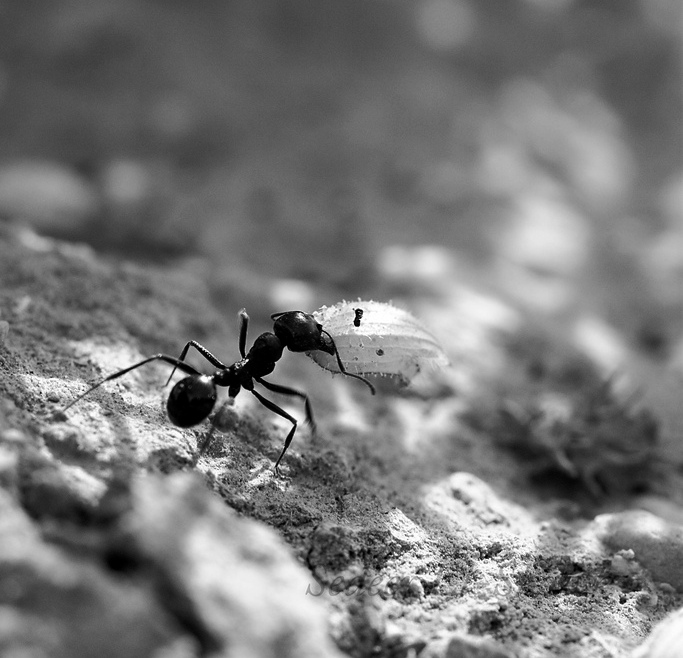
Last year, I wrote about how some ants can find their way home after finding food.  They have the remarkable ability to account for all the twists and turns they made while foraging and calculate a direct path leading straight back to their nest.  A reader emailed to ask if I thought humans would ever be able to do something similar or to achieve the level of co-ordination shown by ants.  This post is based on my reply, where I pointed out several things that humans are amazingly good at doing  — in fact, we do them so well and with such ease that you might be surprised by how difficult they actually are!  I’ve spent a lot of time on Inspiring Science talking about behaviours and abilities which show that other animals aren’t just simple automata because I think it’s important to make the point that although humans are unique, we aren’t special; we’re just another species with our own particular tricks for surviving in this world.  I’ll take a different tack in this post and talk about some of the ways we stand out! Continue reading

The wasp and the cockroach: a zombie story

Tags

, , , , , , , , , , ,

Ampulex compressa, commonly called Emerald Cockroach Wasp. Pictured in Dar es salaam, Tanzania. (Photo credit: Wikipedia)The world of parasites is full of incredible tales of manipulation and mind-control as these creatures twist their hosts to their needs.  Ever since I first heard of parasitoid wasps, I’ve been drawn to them by a delicious mixture of schadenfreude and intellectual fascination.  (Technically, parasitoids are slightly different from parasites, but that’s not important right now.)  Some of the examples of manipulation by parasitoid wasps are just wonderfully, horribly macabre.  I briefly mentioned the emerald cockroach wasp in a previous post; this time I’ll give a few other examples and explain the emerald wasp more thoroughly.  Hopefully I’ll manage to share some of my excitement about these amazing creatures, which made Darwin once write: “I cannot persuade myself that a beneficent and omnipotent God would have designedly created the Ichneumonidae [a group of parasitoid wasps] with the express intention of their feeding within the living bodies of caterpillars, or the cat should play with mice.”
Continue reading

Sex, hormones, and the microbiome

Tags

, , , , , , , , ,

The microbiome — the kilogram of microbes that each of us carries around — has been shown to be involved in everything from obesity and type 2 diabetes to behaviour and sexual preferences.  The composition and effects of the microbiome are very active areas of research, producing results which have challenged the way we think about the evolution and interactions of organisms, including ourselves.  In a paper recently published in the journal Science, researchers showed for the first time that the make up of the microbiome differs between the sexes, linking these differences to changes in hormone levels and disease resistance.
Continue reading