The pan-genome of Emiliania huxleyi

Tags

, , , , , , , , ,

Under certain conditions, Emiliania huxleyi can form massive blooms which can be detected by satellite remote sensing. What looks like clouds in the water, is in fact the reflected light from billions of coccoliths floating in the water-column. Landsat image from 24th July 1999, courtesy of Steve Groom, Plymouth Marine Laboratory. This bloom attracted considerable coverage in the UK media. (Photo credit: Wikipedia)Emiliania huxleyi has more going for it than just a beautiful name. Despite being only a few millionths of a millimeter in size — about a tenth of the thickness of a human hair — this unicellular alga has a major impact on our planet. Blooms of E. huxleyi, which can cover more than 100,000 square kilometres of ocean, are visible from space and affect the global climate; the concerted impact of all the cells in the bloom influences carbon and sulphur cycles and even changes how much light the Earth reflects. Under an electron microscope, E. huxleyi cells reveal their striking, alien beauty; encased in tiny plates called coccoliths, they look like strange spaceships or escape pods. E. huxleyi lives throughout the world’s oceans, from the warm tropics to the subarctic seas, and these plates underlie its remarkable impact on the planet’s climate and geology.
Continue reading
I’ve been interviewed!

Tags

, , , ,

I’m thrilled to let you know that I’ve been interviewed on the Scientific American blog network!  The SA Incubator posts interviews of “young and up-and-coming science, health and environmental writers and reporters”.  I’ve read a couple of the interviews over the last year and was hoping to get interviewed one day, so I was very excited when I got an email last week from Khalil Cassimally inviting me for an interview.  I really enjoyed answering the questions and I hope you’ll enjoy what I had to say.  It’s also a great chance for me to get more exposure, so I’m very grateful for the opportunity.

On another subject, I tried something different in my most recent post on Accumulating Glitches and I’d love to hear what you think — what works for you, what doesn’t, how I could do better.  The post is about ants which practice agriculture and what they might think of the way we farm…

Hauskaa Juhannusta to those of you in Finland!  If anyone will be at the WCSJ 2013 meeting in Helsinki next week, let me know and we can try to meet up!


Three things to look for in science reporting

Tags

, , ,

Some time ago I shared some of my thoughts on science communication, including the importance of learning “to approach issues critically, to question and to reason, [so they would] have the wherewithal to challenge fixed beliefs and undermine authority”.  I’ve also written about things like cognitive dissonance and how our social environment can shape the way we conduct research or interpret the results.  In this post,  I’d like to highlight a few of the flaws you might come across in scientific research and what you should look out for when you hear about a new study.  I’ve picked out just three things you can check to help reassure yourself that a science story is on sound footing, but I hope people will chime in with more suggestions in the comments!
Continue reading

What lies behind illusions?

Tags

, , , , , , , , , ,

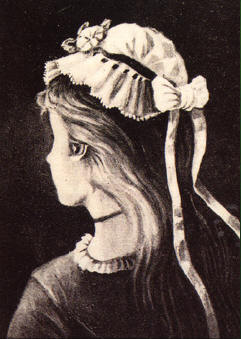
Old woman or young lady?Humans have an exquisite sense of vision. It’s the primary sense for most of us and our making way of interacting with the world around us.  We process the massive amount of visual data generated by sight using trillions of interconnections between billions of neurons spread across half our cerebral cortex.  Despite this, our visual system falls prey to illusions, constructing ambiguous interpretations and objects that can’t or don’t exist.  How do these illusions work and why do they succeed in fooling us even when we know about them? Continue reading

Words of science: science

Tags

, , , , , , ,

Like many other fields, science has its own style of communication full of specific jargon and guided by unwritten rules.  Most of the posts on this blog focus on breaching this barrier to the public’s understanding and appreciation of science.  In this series, I’d like to take another approach by highlighting scientific words which have escaped the confines of jargon to reach a broader appeal because of their sound or their evocative power as metaphors.  Today’s word is a bit different from the earlier words; this time I’d like to talk about the word science itself. [Previous words of science were petrichoralluvium, nychthemeron, crepuscular, and interstitial.]
Continue reading

The viruses that made us

Tags

, , , , , , ,

Enterobacteria phage λ, Lambda phage-coliphage λ, José F. Vargas, http://elnefashu.deviantart.com/ (Photo credit: PHYLOMON)Viruses make their living by breaking into cells and using the machinery and energy in the cell to reproduce.  Once inside, some viruses immediately hijack the cell and make copies of themselves which burst out into the world to infect new cells.  Other viruses take a staid approach, though.  Instead of taking over the cell, they quietly slip a copy of their genes into its DNA.  When the cell divides, it copies the newly acquired viral genes along with the rest of its genome.  It’s a better deal for the virus, since all of the cell’s descendants will be carrying viral genes which can eventually come out of hiding to commandeer the cell and replicate.  A really lucky virus is one that finds itself inside an egg cell.  Getting into the DNA of a single cell means getting copied into all of its daughter cells, but getting into the DNA of an egg cell means getting copied into every cell in the organism that grows from the egg…and from there into all of the organism’s offspring.  Lucky viruses that succeed in pulling off that trick can still break out and cause trouble, but they can also become integrated into their host’s genome; instead of struggling to reproduce, they can then just kick back and enjoy the ride while we lumber along, making copies of them whenever we make new cells or have children. Continue reading