• About the blog
  • About Sedeer
  • Series
    • Words of Science
    • Discussions
    • Foraging
    • Natural Selection
    • QM Workshop
  • Contact me
  • Accumulating Glitches
  • Collective Marvelling

Inspiring Science

~ Casting light on great ideas

Inspiring Science

Tag Archives: Education

Rendez-vous with a Comet

08 Friday Aug 2014

Posted by sedeer in Astronomy, Physics

≈ 8 Comments

Tags

comet, Education, ESA, European Space Agency, Popular science, rosetta, science, space

In the cold reaches of space millions of kilometers from Earth, a ten-year journey is coming to an end and an era of discovery is about to begin. Rosetta, a spacecraft built and launched by the ESA has finally reached its target, meeting up with the comet 67P/Curyumov-Gerasimenko somewhere between the orbits of Mars and Jupiter. We don’t have any vehicles powerful enough to launch Rosetta into the same orbit as the comet, so it’s been a long and lonely trip for the little craft, slingshoting its way around the solar system to make the trip. “After ten years, five months and four days travelling towards our destination, looping around the Sun five times and clocking up 6.4 billion kilometers, we are delighted to finally announce ‘we are here'”, said Jean-Jacques Dordain, the director general of the ESA. Continue reading →
The give-and-take between mothers and their offspring

27 Tuesday May 2014

Posted by sedeer in Development, Evolution, Genetics

≈ 10 Comments

Tags

animals, biology, Developmental biology, Education, evolution, Genetics, imprinting, nursing, offspring, Popular science, science

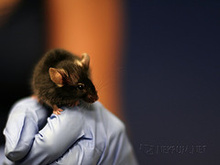
Image credit: Flickr user nekrumThis is a story about a gene which makes nursing mice produce more nutritious milk while also making their offspring less demanding. The gene serves to balance nutrient supply and demand between the mother and pup. If the gene is knocked out, the mother’s milk is less rich, but the pups are more demanding, evening out the impact. Things only go wrong when there’s a mismatch. If pups with a defective copy of the gene feed from a normal mother, their increased demand makes them grow larger than normal. Conversely, pups with a good copy end up smaller if they feed from a mother lacking a working copy, since her milk is less nutritious. Continue reading →

The Right Way to Fall

07 Wednesday May 2014

Posted by sedeer in Links, Mammals

≈ Leave a comment

Tags

animals, Behavior, biology, cat, Education, freefall, gecko, Popular science, science

My latest story on Beacon is about how cats and other animals manage to always land on their feet. It turns out to be a pretty impressive maneuver, and geckos have evolved and entirely different trick to accomplish the same thing:

There’s no need to go far afield to find wonders of the natural world; sometimes it just takes a shift of perspective to notice how they abound in our homes and neighborhoods. Cats, for example, are exquisite animals, with an uncanny ability to take a fall harmlessly by righting themselves in midair. Several years ago, my cat slipped off a sixth-storey ledge, falling something like 20 meters onto hard concrete. She was limping for a few weeks, but her knee healed and there’s no sign of the injury left. How cats manage such a feat is a question which has occupied scientists for over a century; it’s been the subject of in-depth studies in physics, physiology, and even robotics. While some of the details are still unclear, the essential picture is that cats (almost) always land on their feet thanks to an impressive spine-flexing twist maneuver which turns them upright in midair.

Head over to Beacon for the full story…

Drug resistance evolves in inbred parasites

05 Wednesday Mar 2014

Posted by sedeer in Disease, Humans

≈ 1 Comment

Tags

biology, drug resistance, Education, Health, Human, malaria, Popular science, science, Science communication

Mosquito (photo courtesy Wikipedia)It all starts with a mosquito bite. When a hungry mosquito pierces someone’s skin to gorge herself, she also pumps in her saliva to stop the blood from clotting. Far too often, microscopic stowaways hiding in the insect’s salivary glands also make the trip, crossing over into the victim’s bloodstream to look for a new home. These serpentine parasites swim along the blood vessels, making their way to the liver and infecting liver cells within just a few minutes. They hide inside these cells for anywhere from a week to a month (or even several months, in some cases), copying their DNA and growing larger and larger as they prepare for the next stage of their life. Eventually, the growing mass breaks up. A swarm of single-celled parasites bursts out of the liver cells and into the blood; once there, they invade red blood cells, feeding on their haemoglobin and energy stores to fuel another reproductive burst which will infect more red blood cells. As the parasite spreads through the blood, the unfortunate host will start showing the symptoms of malaria — everything from headaches and joint pain to fever, vomiting, and even convulsions. When a mosquito bites an infected person, she sucks up the parasite as part of her bloody meal. The malaria parasite mates within the mosquito, going through several stages before producing the serpentine cells that migrate to the salivary glands, ready to start the entire cycle anew.
Continue reading →

Dying for sex

12 Wednesday Feb 2014

Posted by sedeer in Evolution, Mammals

≈ Leave a comment

Tags

animals, Behavior, biology, Education, evolution, mating, Popular science, reproduction, science, sex

Unfortunately, I’ve been too busy to attend to Inspiring Science this week. Rather than putting out a rushed post, I decided to republish this piece which I originally wrote for Accumulating Glitches last year. I hope you like it!

(Photo credit: Michael Barritt & Karen May, via Wikimedia Commons)Some spiders get eaten by their mates, and male salmon famously fight to the death for access to females, but we generally don’t think of reproduction being quite as risky for mammals. We may prance and pose or jockey for attention, and mating might even be quite painful, but it’s usually not lethal. Among mammals, “live to mate another day” seems to be the guiding principle. Exceptions to this rule are found in the dasyurids and didelphids, groups of small carnivorous marsupial species living in Australia and South America, respectively. “These species experience extreme sexual behaviour,” said Dr. Diana Fisher of the University of Queensland. Males and females mate with multiple partners and matings can go on for many hours. Afterwards, the males all die. Continue reading →

We’re getting closer to a malaria vaccine

24 Friday Jan 2014

Posted by sedeer in Humans, Immunology

≈ Leave a comment

Tags

biology, Education, Health, Human, immunity, malaria, mosquito, Popular science, science, Science communication, vaccination, vaccine

Malaria parasite (photo courtesy Wikipedia)Malaria hardly needs an introduction. With over 200 million people infected, it takes the life of an African child every minute. Although we have drugs to help treat the disease, there isn’t an effective vaccine available, partly due to the malaria pathogen’s variability. Now, a research collaboration between labs in the US and Australia has brought a step closer to that goal by figuring out how to produce a vaccine which works against many different strains. Continue reading →

← Older posts
Newer posts →

Search

Donate Button with Credit Cards
Follow @inspiringsci
Follow Inspiring Science on WordPress.com

Enter your email address to follow this blog and receive notifications of new posts by email.

Join 1,699 other subscribers
RSS Feed RSS - Posts

Ongoing discussions

  • Is there evidence for natural selection? | Uncommon Descent on Natural selection: On fitness
  • istilah kesusastraan on Pointing ravens and theory of mind
  • hazratganj call girl on Pointing ravens and theory of mind
  • gomti nagar call girl on Pointing ravens and theory of mind
  • ghaziabad escorts on Pointing ravens and theory of mind
  • indore escorts nidhi nagar on Pointing ravens and theory of mind
  • wig price on Pointing ravens and theory of mind
  • aso agency on Pointing ravens and theory of mind

What’s popular now?

  • Telling left from right: which side gets the heart?
  • Natural selection: different modes
  • No secrets by the lakeside: how water affects sound
  • What lies behind illusions?
  • Redheads and pain: science or sensationalism?

Blogs to check out

  • Accumulating Glitches
  • alternative viewpoints
  • AntyScience
  • Baldscientist
  • Eyes on the Environment
  • Language Log
  • Letters of Note
  • naked capitalism
  • Raising My Rainbow
  • The Scorpion and the Frog
  • The Smaller Majority

Copyright

Creative Commons License
All text and original images by Sedeer El-Showk. Licensed under a Creative Commons Attribution-NonCommercial-NoDerivs 3.0 Unported License.

Thanks to

  • Arkadia International Bookshop
  • The Book Hive
  • The Television and Movie Store
  • Rönnels Antikvariat
Inspiring Science is part of:
  • Collective Marvelling
  • SciComm Network

I'm on ScienceSeeker-DNA

Nature
Blog Network

Categories

Archives

Create a free website or blog at WordPress.com.

Privacy & Cookies: This site uses cookies. By continuing to use this website, you agree to their use.
To find out more, including how to control cookies, see here: Cookie Policy
  • Subscribe Subscribed
    • Inspiring Science
    • Join 1,699 other subscribers
    • Already have a WordPress.com account? Log in now.
    • Inspiring Science
    • Subscribe Subscribed
    • Sign up
    • Log in
    • Report this content
    • View site in Reader
    • Manage subscriptions
    • Collapse this bar
 

Loading Comments...
 

You must be logged in to post a comment.