Social wasps are specialists at recognizing faces

Tags

, , , , , , , , , ,

A young female paper wasp (Image via Wikipedia)There’s lots of evidence that humans have a specialized mechanism for identifying and responding to faces; for example, people with a condition called prosopagnosia have difficulty recognizing faces but not other objects.  A few years ago, researchers showed that individual paper wasps of the species Polistes fuscatus recognize each other’s faces; the same team has now gone on to show that, like humans, P. fuscatus accomplishes this via a specialized mechanism for facial recognition rather than through general shape or pattern recognition.  This story is an excellent example of a  complex cognitive ability being exhibited by a creature with a relatively simple nervous system.

Continue reading

Redheads and pain: science or sensationalism?

Tags

, , , , , , , , , , , ,

Red hair in close-up (Image via Wikipedia)I’ve recently come across some press coverage reporting research by Danish scientists which has shown that “redheads feel pain differently than the rest of us”.  I read the paper and thought it would be nice to write something short about it here, both for the change of tone and to give my own perspective on it.

Continue reading

Natural selection: selection mechanisms, sex, and the brain

Tags

, , , , , , , , ,

This is second part in my series on natural selection.  In the first part, I discussed different modes of selection; in this post, I’ll explain an important mechanism of natural selection which probably doesn’t get enough attention in basic biology courses.  The idea, called sexual selection, dates back to Darwin, who dedicated over half of one of his books (The Descent of Man and Selection in Relation to Sex) to the subject.  Sexual selection is based on the struggle to reproduce rather than the struggle to survive; this already gives us a hint that the term “fitness” has a different meaning in evolutionary biology than it does in common speech, which is a subject I’ll get to in a later part of this series.

Continue reading

Book review: Constructing A Language

Tags

, , , , , , , , , , ,

Constructing A LanaguageThis post is a bit of an exception.; I don’t generally plan to post book reviews, but I really enjoyed Michael Tomasello’s Constructing A Language and I’m hoping that this will be an informative post rather than just a review.  It’s also a good opportunity for me to start writing about language, which is something I’d like to do even though it’s not my area of expertise. In addition to being a well-written book on its own merits, Constructing A Language really struck me because it successfully challenged what I thought I knew about language acquisition and made me reconsider my position, which is always a remarkable and rewarding experience.  This book gave me the wonderful gift of educating me out of my complacent acceptance of an idea and forcing me to really think about it.

Continue reading

Natural selection: different modes

Tags

, , , , , , ,

I mentioned “directional selection” in an earlier post and someone asked about it, so I decided to take the opportunity to explain the process of natural selection in a bit more detail.  I think there’s a tendency for people to have a very straightforward, simplified view of natural selection when they think about evolution.  As with everything in biology, the real story is more nuanced and therefore more interesting.  I’ll develop these ideas over a series of posts, starting with the different modes of selection in this post and moving on to different mechanisms in a future post.  Understanding how the different aspects of natural selection interact is an important part of appreciating the complex and dynamic process of evolution, which is at the very core of biology and has generated all of the beautifully fascinating life we see around us.

Continue reading

Thinking bees and the concept of “sameness”

Tags

, , , , , , , ,

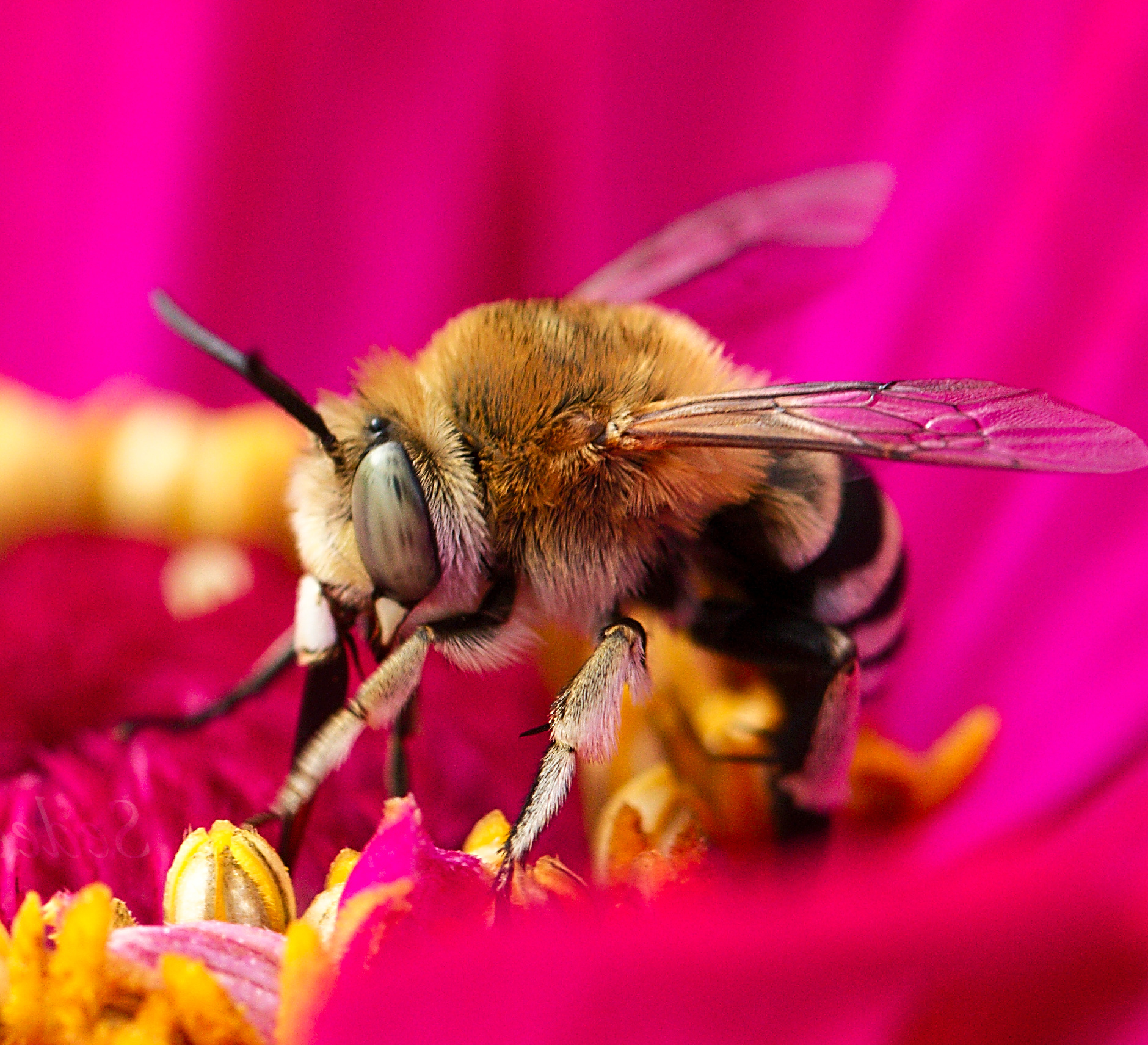
Bee on Zinnia blossomThe ability to categorize objects or experiences as “the same” or “different” has generally been considered a relatively advanced cognitive capacity relegated solely to vertebrates (or perhaps even primates).  However, in a study published in 2001, researchers found that honeybees are able to conceive of sameness and difference, showing that the capacity to make these abstract conceptual distinctions is more widespread than we had believed.

Continue reading