Found while foraging (December 11, 2012)

Tags

, , , , , , , , , , , , , , , , , ,

It’s been a while since I last shared a mish-mash of assorted links.  Unfortunately I’ve been too busy recently to have the time to trawl aimlessly around the web, so there are fewer fruits from my foraging forays.  Anyway, enough mixed metaphors and strained writing; here’s my latest collection of tidbits from the web for you to enjoy.  Feel free to add more in the comments if you’d like.
Continue reading

The ABCs of flowers

Tags

, , , , , , , , , ,

SunburstIn 1991, researchers at the California Institute of Technology described the basic genetic system behind how flowers are made.  The “ABC model” that they proposed was so popular and successful that it was quickly taken up by the community and was even included in textbooks when I did my undergraduate studies just six years later. I remember being fascinated the first time I heard about it. This was the sort of thing that got me really excited — disparate facts were brought together in an elegant mechanism that could robustly set up a flower but was still flexible enough to create different forms. Now, over a decade later, I’d like to share this inspirational work with you. Continue reading

A few thoughts on science communication

Tags

, , , , , , ,

I originally wrote this as a guest post for Speaking of Science, a blog that tries to “de-mystify science communication by offering interviews, news, and anything else about it.”

When Julie asked me to write about why I think science communication is important, I started jotting down a list of reasons. Science has an undeniable impact and prominence in our world, which has benefited from the accumulated fruits of centuries of research. As citizens, we shape this world and are shaped by it, so it’s important to understand the science behind the questions we’re discussing, from antibiotics and GMOs to the value of a Mars mission or research in theoretical physics.  This kind of understanding can also be important on an individual level. Knowing more about how your body works can help you make informed decisions about diet and lifestyle or medical procedures — or even what kind of birth control to use. These are important aspects of science communication, but they’re not really a source of inspiration to me or a guiding factor in deciding what I write about. Science communicators do have a responsibility to fulfil a role in mediating these discussion, and though I try to keep aware of that and contribute, it’s not where my passion truly lies. Continue reading

The viruses that infect the bacteria that live in your gut

Tags

, , , , , , , , , , , ,

Electron micrograph of Bacteriophages (Photo credit: Wikipedia)Your body has ten times more bacterial cells than human cells containing 150 times as much genetic material.  I’ve written several posts about how our gut bacteria, the microbiome, can influence the development of allergies, obesity and type-2 diabetes.  We’ve only recently started studying the microbiome and there’s still a lot to learn; it’s quite an active area of research.  For example, just last year scientists discovered that individuals could be divided into three groups based on the composition of their microbiome, but new research has cast doubt on that idea.  And yet, like a matryoshka doll, our biology has still another surprise in store for us: wherever bacteria are found, there are viruses which infect them.  As we learn more about the microbiome and its implications, some scientists have turned their attention to the the viral microbiome, the viruses that prey on our gut bacteria and shape their community. Continue reading

The basis of our overly optimistic beliefs

Tags

, , , , , , , , , , , ,

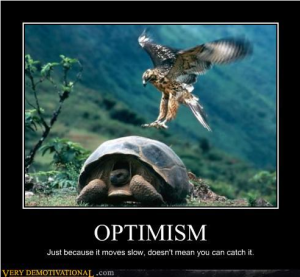
Optimism (Photo credit:verydemotivational.com)The human brain seems to be wired for forward-looking optimism.  In 2007, Tali Sharot and a team of scientists at University College London showed that people who were asked to imagine positive and negative future events consistently felt like the positive events are closer in time; the positive future events also felt closer than events in the past, whether positive or negative.  More recently, Dr. Sharot has turned her attention to the “good news/bad news effect”, our tendency to update our beliefs to reflect good news more than bad news.  Over the last few years, she and her team have identified the part of the brain responsible for this behaviour and even shown how to disrupt it.
Continue reading

Before they were famous: scientist edition

Tags

, , , , , , , , , , , , ,

There are a few scientists who are immediately recognizable even to people outside the field.  (Unfortunately, they seem to be mostly men…) It struck me that these iconic images are from later in life, when their fame was already well-established.  I decided to track down and share some pictures from when they actually did the work for which we remember them.

Continue reading