Petition for Open Access

Tags

, , , , , , , ,

At the moment, many of the studies I write about on this blog are published by journals retain the copyright and charge access.  (A notable exception is the PLoS family of journals.)  The fee charged by these journals is significant, meaning people are unlikely to have access to this research except via an institute such as a university.  This is problematic since much of the research that went into producing those articles was publicly funded: why should the taxpayer have to pay once to support the research and again to access the results?  Why should the private publishing companies reap massive profits from publicly funded research?  One solution, which I’ve mentioned before, is Open Access, the unrestricted publication of publicly funded research results online.  The people at access2research have started a “We the People” petition to get the Obama administration to address this issue.  They need to collect about 7,000 more signatures before June 19, so if you agree with the idea of open access to the results of taxpayer-funded research, please head over and sign the petition.
Through the gut: how plants in food regulate genes in animals

Tags

, , , , , , , , , , , , ,

In an exciting discovery reported last year, a team of Chinese researchers found that some of the genetic material in our food might survive digestion and go on to regulate our genes and affect our physiology.  This new mechanism for genetic interactions between very different species raises interesting evolutionary questions and will probably have implications for the study of health and nutrition, but it’s important to understand what the study was actually about, particularly since this will likely affect the debate around GMO foods. Continue reading

Words of science: petrichor

Tags

, , , , , , , , ,

Like many other fields, science has its own style of communication full of specific jargon and guided by unwritten rules.  Most of the posts on this blog focus on breaching this barrier to the public’s understanding and appreciation of science.  In this series, I’d like to take another approach by highlighting scientific words which have escaped the confines of jargon to reach a broader appeal because of their sound or their evocative power as metaphors.  Today’s word is petrichor.
Continue reading

We still don’t know how birds navigate

Tags

, , , , , ,

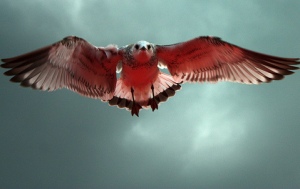
A melodramatic picture of a pigeonEveryone knows that migrating birds are capable of incredible feats of navigation; for example, the Bar-tailed Godwit manages to navigate across the Pacific during its non-stop 11,000km flight from Alaska to New Zealand. Some birds use visual or olfactory cues to navigate, but many birds are able to sense the Earth’s magnetic field, an ability which is supposed to be underpinned by a group of iron-rich cells in the upper beak. However, a study just published in Nature has uncovered the true identity of these cells and shown that they’re probably not involved in sensing magnetism, re-opening the question of how birds can navigate across thousands of kilometers.
Continue reading