• About the blog
  • About Sedeer
  • Series
    • Words of Science
    • Discussions
    • Foraging
    • Natural Selection
    • QM Workshop
  • Contact me
  • Accumulating Glitches
  • Collective Marvelling

Inspiring Science

~ Casting light on great ideas

Inspiring Science

Category Archives: Development

Sex and sociality: the genetics of being different

01 Friday Feb 2013

Posted by sedeer in Development, Genetics, Hymenoptera, Insects

≈ 7 Comments

Tags

Ant, Ant colony, ants, Chromosome, DNA, Fire ant, Gene, polygyny, Popular science, Queen ant, Red imported fire ant, science

Solenopsis invicta (Photo credit: AJC1)An international team of researchers studying fire ants have discovered the first “social chromosome”.  While this is obviously exciting to those of us who are fascinated by the advanced social organization of ants, the discovery also has broader implications.  The mechanism the researchers uncovered is similar to how sex is determined in many animals, creating the tantalizing possibility that it might be an example of a more general mechanism for evolving distinctly different complex behaviours. Continue reading →

From chimps to chickens: how a little DNA can make a lot of difference

06 Sunday Jan 2013

Posted by sedeer in Development, Evolution, Genetics

≈ 6 Comments

Tags

alternative splicing, animals, biology, DNA, Gene, Genome, mammal, Messenger RNA, Popular science, RNA sequencing, RNA splicing, science, Species, Transcriptome, vertebrate

A stretch of DNA (Image credit: Wikipedia)Humans and chimpanzees famously share more than 98% of their genome and yet the two species look and behave quite differently.  This apparent paradox stretches well beyond our little corner of the tree of life; we share more than half our genes with chickens and those we share are 75% identical.  Two studies published together in the December issue of Science tackled this perplexing discrepancy by showing that there may be more to a genome than meets the eye. Continue reading →

Christmas post: Let it snow!

22 Saturday Dec 2012

Posted by sedeer in Complex systems, Development

≈ 8 Comments

Tags

Christmas, crystal, Crystal growth, Crystallization, Ice, ice crystal, Popular science, science, snow, Snowflake, winter

A picture of a Snow Crystal takenA picture of a Snow Crystal taken by Wilson Bentley, "The Snowflake Man." (Photo credit: Wikipedia) by Wilson Be...Snowflakes, with their intricate patterns and captivating symmetry, are entrancingly beautiful and have become a ubiquitous icon of winter. Reading D’Arcy Thompson’s On Growth and Form during the plentiful and early snowfall we’ve enjoyed in southern Finland this winter, I couldn’t help but wonder how these remarkable structures form. I decided the right response would be to write a post about it and avail myself of the opportunity to learn about something new. We’re having a white Christmas in Finland, but wherever you are and whatever the weather may be, read on to find out what makes snowflakes so beautiful and whether each one really is unique. Continue reading →

Hsp90: translating environmental stress into evolutionary change

16 Sunday Dec 2012

Posted by sedeer in Development, Evolution, Form, Insects, Plants

≈ 3 Comments

Tags

biology, Developmental biology, Drosophila, evolution, Genetics, Hsp90, Insecta, Mutation, Phenotype, Popular science, shape

In the 1990s, Suzanne Rutherford and Susan Lindquist were studying fruit flies with a mutated version of the Hsp90 gene and found that the absence of this single gene led to a wide range of developmental defects.  This was surprising not only because Hsp90 isn’t directly related to development, but also because of the remarkable breadth of its impact.  Uncovering how this gene affects so many aspects of development has led to an intriguing story linking responses to environmental stress with the evolution of developmental pathways.
Continue reading →

The ABCs of flowers

06 Thursday Dec 2012

Posted by sedeer in Development, Plants

≈ 4 Comments

Tags

biology, Developmental biology, Flower, Gene, Gynoecium, Petal, Plant, Popular science, science, Sepal, Stamen

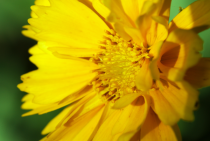
SunburstIn 1991, researchers at the California Institute of Technology described the basic genetic system behind how flowers are made.  The “ABC model” that they proposed was so popular and successful that it was quickly taken up by the community and was even included in textbooks when I did my undergraduate studies just six years later. I remember being fascinated the first time I heard about it. This was the sort of thing that got me really excited — disparate facts were brought together in an elegant mechanism that could robustly set up a flower but was still flexible enough to create different forms. Now, over a decade later, I’d like to share this inspirational work with you. Continue reading →

Telling left from right: which side gets the heart?

23 Tuesday Oct 2012

Posted by sedeer in Development, Evolution, Form, Genetics, Vertebrates

≈ 3 Comments

Tags

animals, biology, Cytoskeleton, emergence, Popular science, science, shape, symmetry, Tubulin

This was originally a guest post on The Trenches of Discovery. Thanks, Shaun!

Selection of internal organs in human anatomy. (Image credit: Wikipedia)One out of every 8,000 humans is born with some of their internal organs on the wrong side of their body, a condition which can have serious medical consequences. Although we’re usually described as symmetric, that’s only superficially true. Like other vertebrates, we look symmetric from the outside but our internal organs show left-right asymmetry; unless you happen to be a Time Lord, you have only one heart which is normally located on the left side of your chest.  Changes to the organization of the internal organs can lead to cardiac defects, misalignment of the bowel and other serious problems.  Many genes are known to play a role in establishing this asymmetry, but we still don’t fully understand its evolutionary and developmental origins.  Earlier this year, a paper published in the journal PNAS described how this asymmetry is established by  subcellular components early in embryonic development.

Continue reading →

← Older posts
Newer posts →

Search

Donate Button with Credit Cards
Follow @inspiringsci
Follow Inspiring Science on WordPress.com

Enter your email address to follow this blog and receive notifications of new posts by email.

Join 1,699 other subscribers
RSS Feed RSS - Posts

Ongoing discussions

  • Is there evidence for natural selection? | Uncommon Descent on Natural selection: On fitness
  • istilah kesusastraan on Pointing ravens and theory of mind
  • hazratganj call girl on Pointing ravens and theory of mind
  • gomti nagar call girl on Pointing ravens and theory of mind
  • ghaziabad escorts on Pointing ravens and theory of mind
  • indore escorts nidhi nagar on Pointing ravens and theory of mind
  • wig price on Pointing ravens and theory of mind
  • aso agency on Pointing ravens and theory of mind

What’s popular now?

  • Telling left from right: which side gets the heart?
  • Natural selection: different modes
  • No secrets by the lakeside: how water affects sound
  • What lies behind illusions?
  • Redheads and pain: science or sensationalism?

Blogs to check out

  • Accumulating Glitches
  • alternative viewpoints
  • AntyScience
  • Baldscientist
  • Eyes on the Environment
  • Language Log
  • Letters of Note
  • naked capitalism
  • Raising My Rainbow
  • The Scorpion and the Frog
  • The Smaller Majority

Copyright

Creative Commons License
All text and original images by Sedeer El-Showk. Licensed under a Creative Commons Attribution-NonCommercial-NoDerivs 3.0 Unported License.

Thanks to

  • Arkadia International Bookshop
  • The Book Hive
  • The Television and Movie Store
  • Rönnels Antikvariat
Inspiring Science is part of:
  • Collective Marvelling
  • SciComm Network

I'm on ScienceSeeker-DNA

Nature
Blog Network

Categories

Archives

Create a free website or blog at WordPress.com.

Privacy & Cookies: This site uses cookies. By continuing to use this website, you agree to their use.
To find out more, including how to control cookies, see here: Cookie Policy
  • Subscribe Subscribed
    • Inspiring Science
    • Join 1,699 other subscribers
    • Already have a WordPress.com account? Log in now.
    • Inspiring Science
    • Subscribe Subscribed
    • Sign up
    • Log in
    • Report this content
    • View site in Reader
    • Manage subscriptions
    • Collapse this bar
 

Loading Comments...
 

You must be logged in to post a comment.